
For most retailers, the Shopify API is invisible.
Orders flow. Payments sync. Inventory updates. Finance assumes the numbers are right.
Until they aren’t.
As Shopify continues its regular API release and deprecation cycle, more retailers are discovering that the biggest risk isn’t the API change itself, it’s what happens to the business when integrations quietly fall out of step.
In 2026, the question is no longer “Do we have a Shopify integration?”
It’s “Is our Shopify API version still supported and who’s responsible for keeping it that way?”
Shopify API versioning: normal for Shopify, risky for retailers
Shopify releases new API versions on a predictable schedule and retires older versions on fixed timelines. Once a Shopify API version reaches end of support, Shopify no longer guarantees behaviour, compatibility, or data integrity.
From a platform perspective, this is expected.
From an operational perspective, it introduces risk, especially when API upgrades are treated as a one-off technical exercise rather than an ongoing responsibility.
If your ERP or connector is running on an outdated Shopify API, common symptoms include:
- Partial or delayed data syncing
- Refunds and adjustments not behaving as expected
- Inconsistent fees, duties, or tax data
- Inventory mismatches across channels
The challenge is that these issues rarely cause obvious failures. They surface slowly, often during reconciliation or reporting, when fixing them is already expensive.
Why integrations age faster than most businesses expect
Many Shopify integrations were implemented years ago and then left untouched. If orders were syncing and revenue was landing in the ERP, the integration was considered “done”.
But Shopify’s platform evolves quickly. APIs change. Commerce features expand. Data structures become richer.
An integration that isn’t actively maintained alongside Shopify API changes doesn’t stay static, it quietly degrades.
This is where the risk shifts from technical to operational.
Finance teams absorb the cost through:
- Manual workarounds
- Time spent reconciling discrepancies
- Reduced confidence in reporting
- Slower close cycles
Where Shopify API issues show up first
When Shopify API versions drift out of alignment, the impact tends to appear in the same pressure points.
Orders, refunds, and adjustments
Order data may still sync, but refunds, partial refunds, gift cards, or promotions may not reconcile cleanly, leaving finance teams to untangle “almost correct” numbers.
Fees, duties, and tax treatment
As Shopify continues to enhance how it handles fees and tax logic, older API implementations often miss or misclassify this data, creating unexplained margin variance.
Inventory and fulfilment
Inventory mismatches between Shopify, ERP, and 3PL systems are often the earliest warning sign — particularly in multi-location or omnichannel environments.
Reporting confidence
The most damaging outcome is subtle. When leadership begins to question whether reports reflect reality, decision-making slows and scale becomes harder.
Why connector capability and support matters
Out-of-the-box Shopify connectors are designed to get retailers live quickly. They are not always designed to evolve at the same pace as Shopify’s API.
As businesses grow, they often need support for:
- Multi-store and multi-currency models
- Complex refund and settlement logic
- Payment fee visibility
- Inventory accuracy across POS, eCommerce, and fulfilment partners
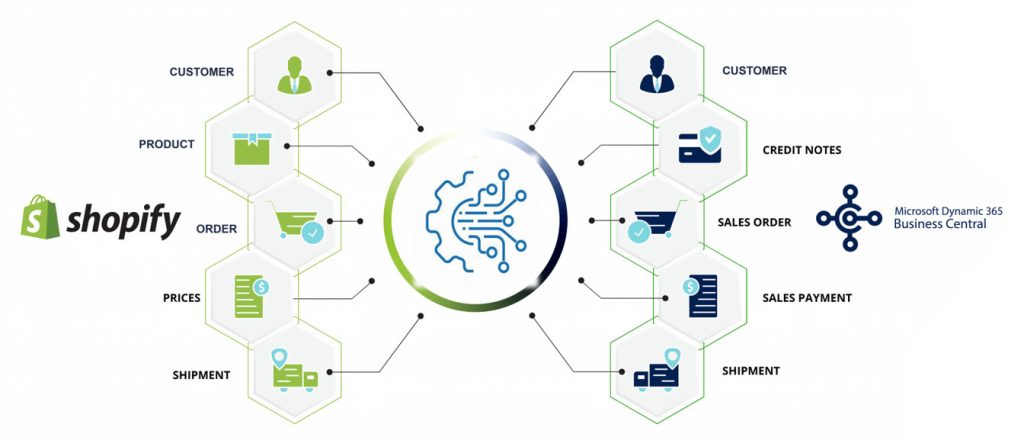
This is where the CoreBiz Shopify Connector has been designed differently.
Rather than treating Shopify integration as a static connection, the CoreBiz connector is built to:
- Stay aligned with supported Shopify API versions
- Handle real-world retail complexity as it emerges
- Evolve as Shopify introduces new capabilities
Just as importantly, it is fully supported by CoreBiz, meaning Shopify API upgrades, changes, and edge cases are not something clients are left to navigate alone.
Shopify API change should never be a solo exercise
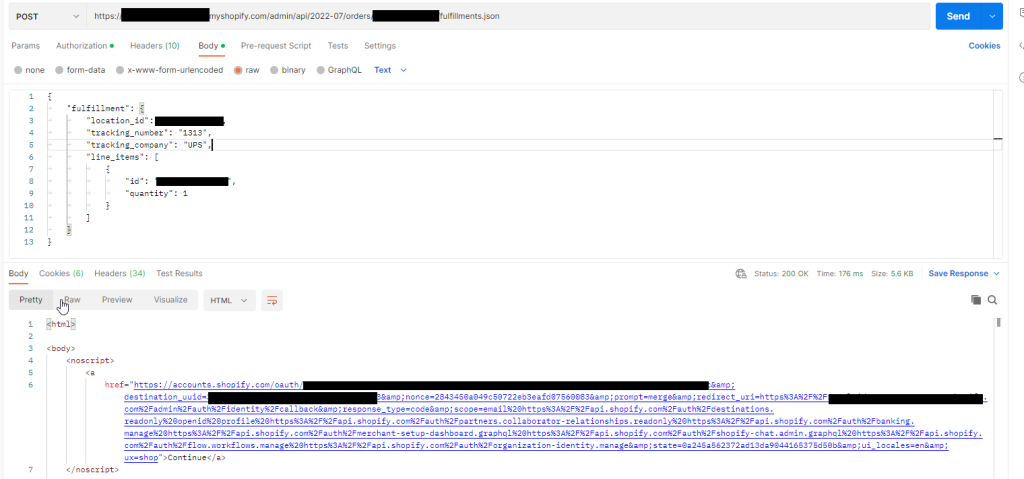
One of the biggest risks retailers face is not knowing when an API upgrade is required, who owns it, or how it impacts downstream systems.
At CoreBiz, Shopify API changes are treated as shared responsibility, not a handover.
That means:
- Monitoring Shopify API changes and deprecations
- Assessing operational impact, not just technical compatibility
- Supporting upgrades and enhancements as part of the broader system lifecycle
Retailers should never find themselves discovering API issues after the fact, during reconciliation or reporting.
Designing for change, not permanence
Shopify will continue to evolve. APIs will change. That’s not a warning sign it’s the reality of a modern commerce platform.
The real question is whether your integration is designed to absorb that change without disrupting operations or eroding confidence in the numbers.
Retailers that combine a robust Shopify connector with an active support partner don’t just “keep up” with Shopify API changes. They remove them as a source of risk altogether.
If your Shopify integration hasn’t been reviewed recently, it may be time to ask:
- Which Shopify API version are we running?
- What happens when it changes?
- And who’s ensuring we’re never dealing with that alone?